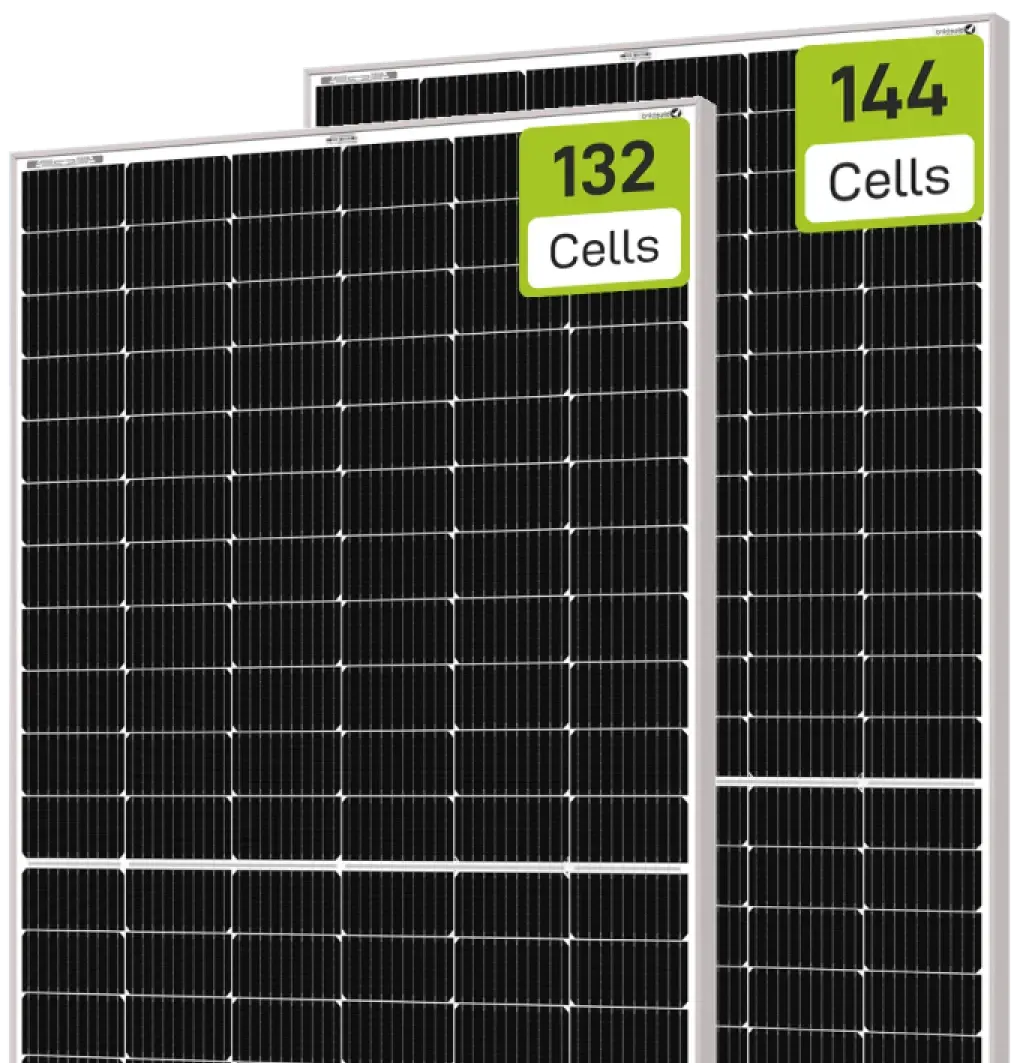
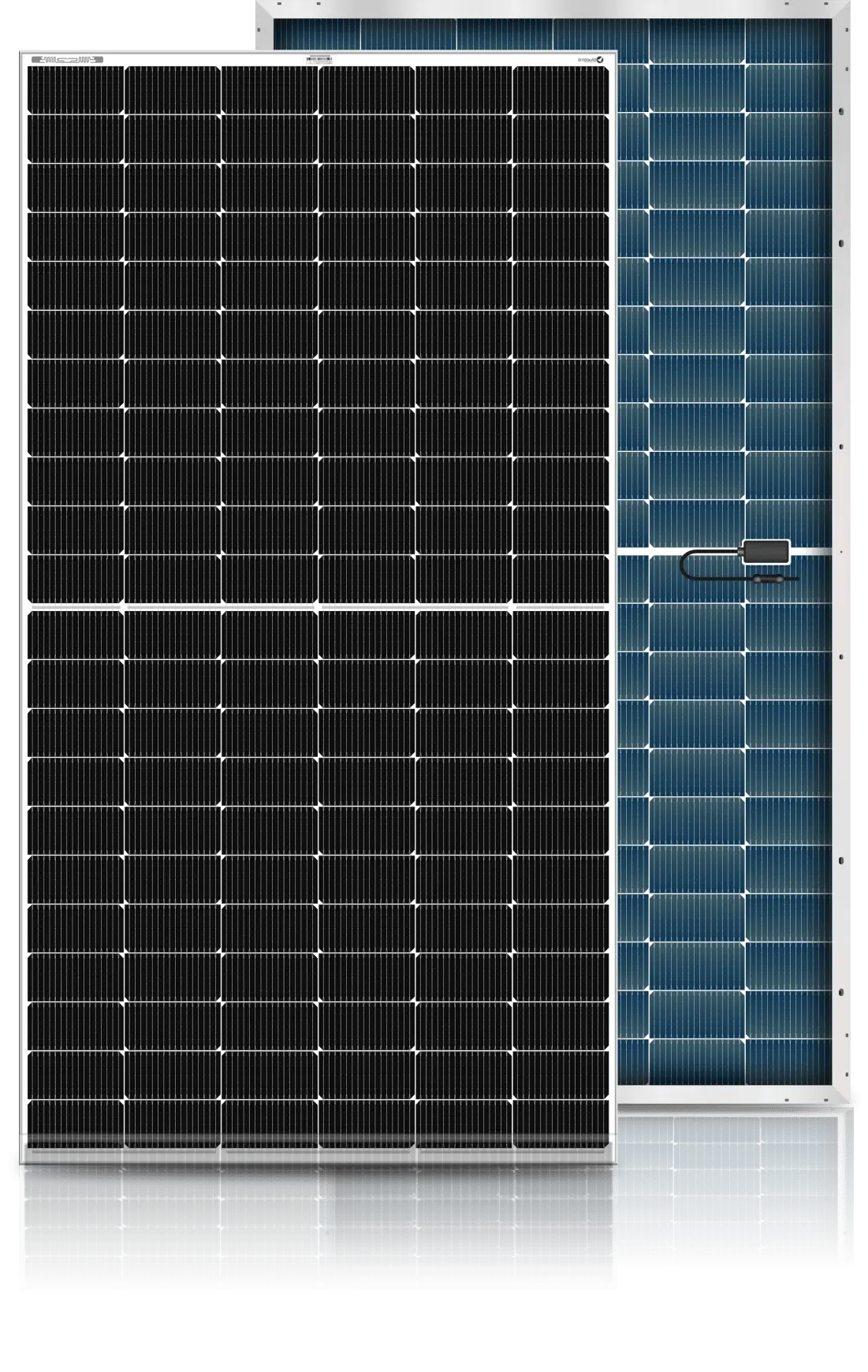
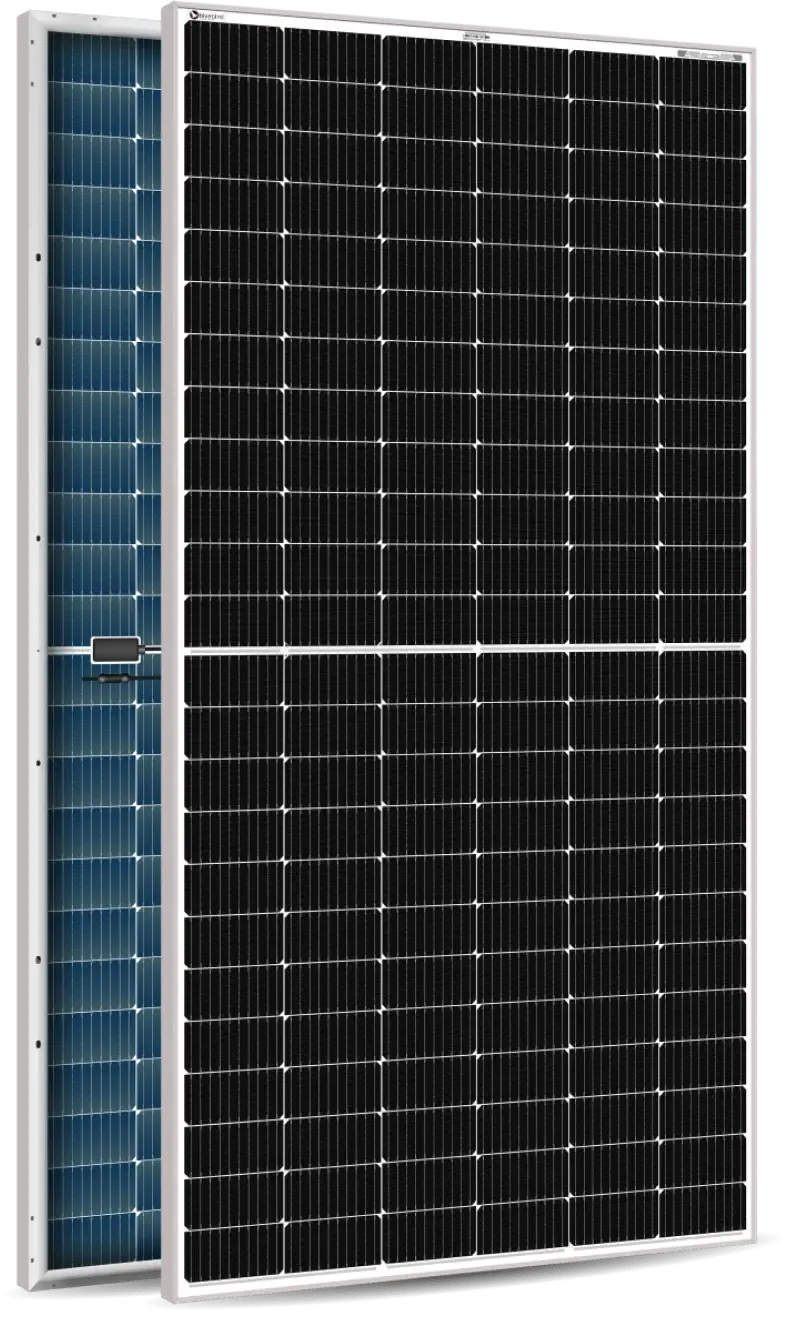
Mono PERC Bifacial Transparent Backsheeet Solar Module
MBB, M10 Half-Cut Cell




















Certifications










| Module Series | BBS24MC480 | BBS24MC485 | BBS24MC490 | BBS24MC495 | BBS24MC500 | BBS24MC505 | BBS24MC510 |
| Maximum Power Pmax (Wp) | 480 | 485 | 490 | 495 | 500 | 505 | 510 |
| Maximum Voltage Vmpp (V) | 37.78 | 37.93 | 38.08 | 38.23 | 38.38 | 38.53 | 38.70 |
| Maximum Current Impp (A) | 12.71 | 12.79 | 12.87 | 12.95 | 13.03 | 13.11 | 13.18 |
| Open Circuit Voltage Voc (V) | 44.95 | 45.10 | 45.25 | 45.40 | 45.40 | 45.70 | 45.85 |
| Short Circuit Current Isc (A) | 13.58 | 13.66 | 13.74 | 13.82 | 13.90 | 13.98 | 14.06 |
| Module Efficiency (%) | 19.45 | 19.65 | 19.85 | 20.05 | 20.25 | 20.46 | 20.66 |
| Fill factor (%) | 78.66 | 78.75 | 78.83 | 78.91 | 79.25 | 79.06 | 79.12 |
| Electrical Characteristics at NOCT : | NOCT:800W/m2 irradiance, 20°C ambient temperature, Wind Speed 1m/sec | ||||||
| Maximum Power Pmax (Wp) | 359.04 | 362.78 | 366.52 | 370.26 | 374.00 | 377.74 | 381.48 |
| Maximum Voltage Vmpp (V) | 35.12 | 35.26 | 35.40 | 35.54 | 35.68 | 35.82 | 35.98 |
| Maximum Current Impp (A) | 10.23 | 10.29 | 10.36 | 10.42 | 10.49 | 10.55 | 10.61 |
| Open Circuit Voltage Voc (V) | 42.03 | 42.17 | 42.31 | 42.45 | 42.45 | 42.73 | 42.87 |
| Short Circuit Current Isc (A) | 10.94 | 11.00 | 11.07 | 11.13 | 11.20 | 111.26 | 11.33 |
| BIFACIAL OUTPUT – BACKSIDE POWER GAIN @ STC* [Bifaciality Factor: 70% ± 5%] | |||||||
| *Bifacial gains depends on the power plant design and albedo of installation site | |||||||
| 10% Power Output (Wp) | 528 | 534 | 539 | 545 | 550 | 556 | 561 |
| Module Efficiency (%) | 22.19 | 22.42 | 22.65 | 22.88 | 23.12 | 23.35 | 23.58 |
| 15% Power Output (Wp) | 552 | 558 | 564 | 569 | 575 | 581 | 587 |
| Module Efficiency (%) | 23.20 | 23.44 | 23.68 | 23.93 | 2417 | 24.41 | 24.65 |
| 20% Power Output (Wp) | 576 | 582 | 588 | 594 | 600 | 606 | 612 |
| Module Efficiency (%) | 24.21 | 24.46 | 24.71 | 24.97 | 25.22 | 25.47 | 25.72 |
| 25% Power Output (Wp) | 600 | 606 | 613 | 619 | 625 | 631 | 638 |
| Module Efficiency (%) | 25.22 | 25.48 | 25.74 | 26.01 | 26.27 | 26.53 | 26.79 |
| 30% Power Output (Wp) | 624 | 631 | 637 | 644 | 650 | 657 | 663 |
| Module Efficiency (%) | 26.23 | 26.50 | 26.77 | 27.05 | 27.32 | 27.59 | 27.87 |
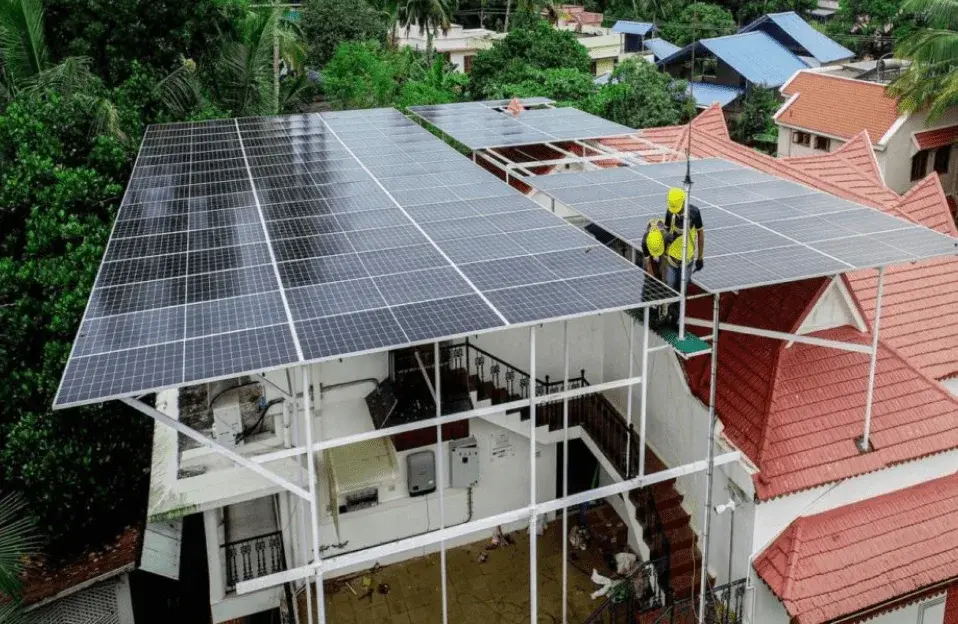
Various Application

Frequently Asked Questions
Mono PERC bifacial solar modules are advanced solar panels designed to capture sunlight from both the front and rear sides, helping generate more electricity compared to conventional mono panels.
Bifacial solar modules absorb sunlight from the front side as well as reflected light from the rear side, increasing overall power output and efficiency.
A transparent backsheet is a special protective rear layer that allows sunlight reflection to pass through the back side of the module, helping bifacial cells generate additional electricity.
Key benefits include:
- Higher energy generation
- Better low-light performance
- Improved efficiency
- Reduced energy losses
- Longer operational life
- Better return on investment
Depending on installation conditions and surface reflectivity, bifacial modules can generate approximately 5% to 25% more energy compared to conventional mono panels.
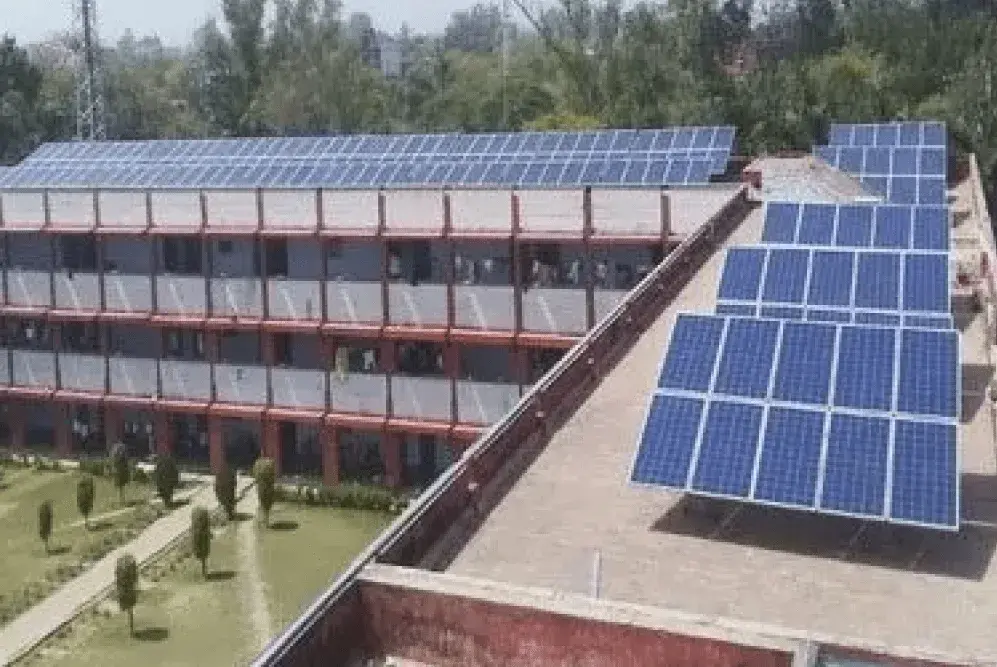
Yes, these modules are suitable for residential, commercial, and industrial rooftop systems, especially where reflective roof surfaces are available.
Most Mono PERC bifacial modules offer high conversion efficiency, generally ranging between 20% and 22%.
Yes, bifacial modules continue generating electricity during cloudy and low-light conditions, although output levels may vary depending on sunlight availability.
Yes, transparent backsheet modules are designed for long-term outdoor performance and are resistant to moisture, UV exposure, and harsh weather conditions.
Most bifacial solar modules come with:
- 12–15 years product warranty
- 25–30 years performance warranty
Yes, because they generate more electricity than standard modules, bifacial solar panels can help reduce electricity costs more effectively over time.
Performance improves with:
- Reflective rooftop surfaces
- Proper installation height
- Optimal tilt angle
- Minimal shading
Bifacial modules generally provide higher energy generation and improved long-term performance compared to traditional mono solar panels.
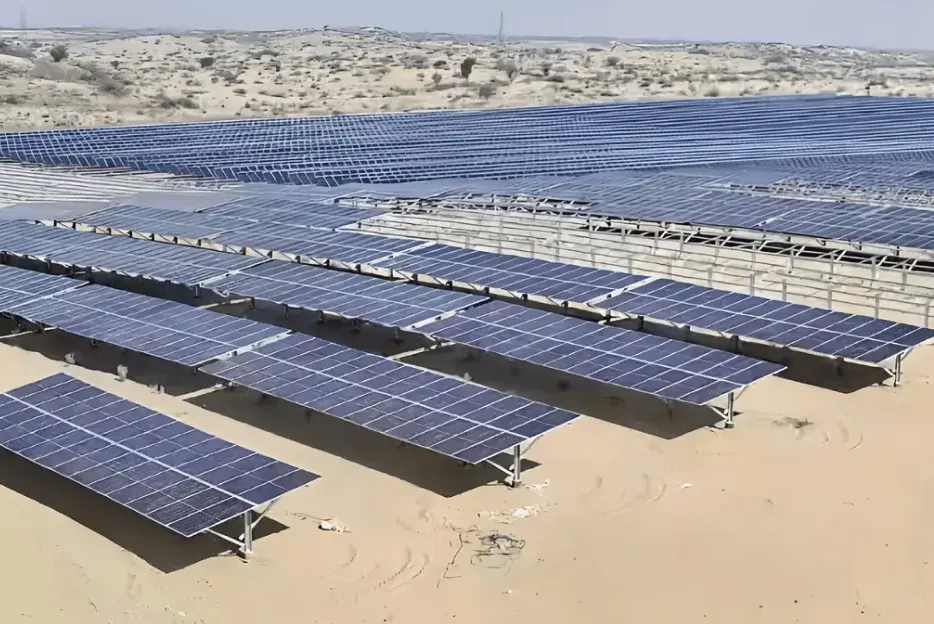
Yes, bifacial transparent backsheet modules are widely used in commercial and utility-scale solar projects because they maximize overall energy yield and optimize project space utilization.